
Finding a Wedding Dress in Size 20: A Complete Guide
Last Updated: October 30, 2026
Quick Summary
Finding a size 20 wedding dress starts with taking fresh bust, waist and hip measurements and matching them to each designer's own sizing chart, since bridal sizing has no universal standard. If your measurements fall across two sizes, order the larger size 20 wedding dress and plan on alterations to take it in.
Measure over the undergarments you plan to wear on the day.
A-line and ball gown cuts skim the hip and create an unbroken line.
Ask the shop which size 20 samples are in stock before you book.
Budget alterations as a separate line item and get the estimate in writing.
Bex Bridal reserves the entire salon for one bride and up to four guests.
Table of Contents
Why Size 20 Wedding Dress Shopping Starts With Measurements
Finding a wedding dress in size 20 starts with a tape measure, not a tag. Bridal sizing runs differently from street sizing, and a dress labeled 20 in one designer's collection can measure like a 16 or a 22 in another.
Take three measurements and write them down: bust at the fullest point, natural waist at the narrowest point, and hips about eight inches below the waist. Measure over the undergarments you plan to wear on the day. If your measurements land across two sizes, order to the larger one and plan on alterations to take in the rest.
That single habit prevents the most expensive mistake in bridal shopping: buying a gown that cannot be let out enough to fit.
Reading a Wedding Dress Sizing Chart Without Guessing
A wedding dress sizing chart converts body measurements into a designer's size number, and it is a reliable way to translate your numbers into a size 20 order. Every designer publishes its own chart, so the same three measurements can point to different sizes across collections.
Here is how to work through it:
Match bust, waist and hips separately, then circle the largest resulting size
Ignore the size you wear in jeans or dresses from a department store
Check whether the chart is for misses or plus sizing, since size 20 and size 20W are cut differently
What most guides miss is that bridal sizes have no universal standard. A chart is a starting point for the fitting room, not a verdict.
Silhouettes, Sleeves and Coverage That Work in a Size 20
The best silhouettes for a size 20 wedding dress are A-line and ball gown cuts, which skim the hip and create an unbroken line from waist to hem.
Mermaid and sheath cuts can work beautifully too, but they demand precise fit through the hip and thigh, which leaves little room for alteration.
Coverage choices matter as much as cut. Off-the-shoulder necklines balance a fuller bust, lace sleeves add elegance without bulk, and a basque waist draws the eye to the narrowest part of the torso.
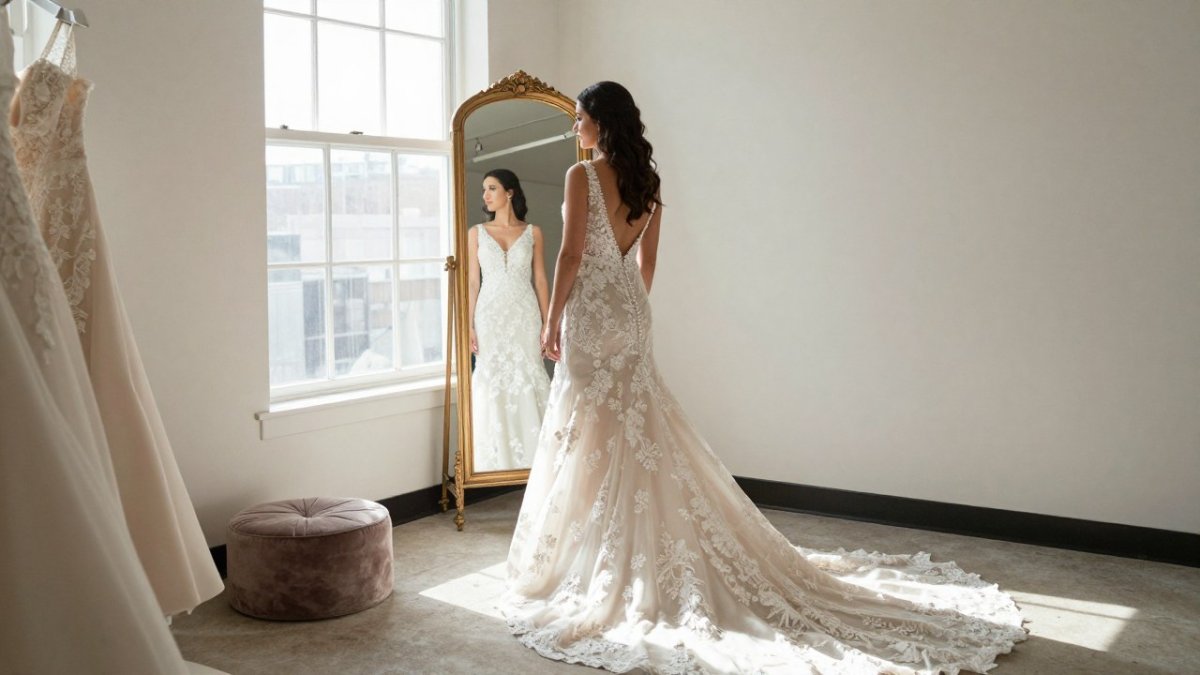
For a closer look at how a size 20 gown reads on a real body, see this figure-flattering size 20 dress. Brides weighing a nearby size can also browse a flowing classic size 22 wedding dress to compare how the same silhouette family drapes.
How to Confirm Size 20 Wedding Dress Samples Before You Visit
Confirming size 20 samples before you visit means asking the shop directly which gowns are on the rack in your measured size and which can be clipped to simulate the fit.

Why sample size and order size are not the same thing
Bridal shops buy samples in a small range of sizes to serve as many brides as possible, so the floor model is often a size 10, 12, or 14 even when the designer offers the gown up to size 20 or beyond. When the sample is smaller than your measured size, a stylist uses clips and panels to approximate the fit, but clipping cannot show you how the bodice sits on a fuller bust or how the skirt falls over the hip.
The three questions to ask on the phone
Call ahead and ask three questions: what size 20 wedding dress samples are in stock today, how many of them are A-line or ball gown, and whether the shop can order a gown in your size if the sample is smaller. Get the answer before you book. A useful follow-up is to ask for style names or photos of the specific size 20 samples, so you can check the silhouette and neckline against your shortlist before you drive over.
Pro Tip Ask whether the shop stocks samples in size 20W as well as size 20. Misses and plus sizing are cut differently, and a shop that carries one may not carry the other.
What a good answer sounds like
A shop that knows its inventory will name gowns and give you the sample size for each. Watch out for a vague answer such as "we have plenty in your size" without named gowns. Ask for style names or photos, and if the answer stays vague, ask to speak with the person who will run your appointment.
Confirm the appointment logistics at the same time
While you have a shop on the phone, confirm appointment length, how many guests are allowed, whether parking is on site, and whether the fitting room and salon are accessible for any mobility needs in your group. These details are easy to overlook and hard to fix once you are standing in the doorway.
If the sample is not there
Ask whether a shop can request a loaner sample from a designer, whether a trunk show is scheduled, or whether a made-to-order gown can be tried in a similar silhouette. If none of those options exist, weigh the shop's ordering options against a try-on visit to a shop that stocks your size.
Bridal Appointment Questions to Ask in Littleton
The right bridal appointment questions turn a pleasant hour into a decision you can trust.
Ask about price range before you try anything on, so no gown outside your budget reaches the fitting room.
Before booking anywhere, it helps to read honest bride feedback on pricing and experience at Colorado shops and to compare affordable bridal boutiques in the Denver area.
Wedding Dress Alterations for Plus Size Brides: Budget and Timing
Wedding dress alterations for plus size brides typically need more fittings and more time than standard alterations, because a gown must be adjusted at the bust, waist and hem independently. Budget for alterations as a separate line item from the dress itself, and confirm the estimate before you commit. The gown price is the number brides plan for; the alteration bill is the number that surprises them.
What the alteration budget actually includes
Treat alterations as a second purchase, not a rounding error. A common pattern is for brides to budget a separate alteration allowance on top of the gown price, then add accessories, shoes, undergarments, cleaning, and any rush fee. Ask the shop to itemize the estimate by task, bodice take-in, waist adjustment, hem, bustle, sleeve work, so you can see which line items are structural and which are cosmetic.
Watch Out A quote given before the first fitting is an estimate, not a final price. Structural work at the bodice or a hem rebuild can move the number, so ask how the shop handles a revised estimate and whether you approve changes before work continues.
The fitting cadence
Fitting schedules vary, but many brides book a first fitting after the gown arrives, a second after adjustments, and a final fitting close to the wedding date to confirm the gown still fits and the bustle works. A size 20 gown that needs work at the bust, waist, and hem may need an additional fitting between the first and second, because each area is adjusted separately and the changes interact.
Timing milestones to work backward from
Timing is the constraint most brides underestimate. A gown that needs structural work at the bodice, a hem rebuild or sleeve adjustment should be in the seamstress's hands well before the wedding. Work backward from your date: allow time for the gown to arrive, the first fitting, the alteration work itself, and a final fitting with enough buffer to fix anything that shifted.
Colorado timing and seasonal considerations
Couples marrying at elevation or in cooler months often need sleeves, a wrap, or a lined bodice that changes the alteration plan. Build those additions into the first fitting conversation rather than adding them late. If your date is close, ask about rush alterations early.
Questions to ask before you leave the gown
Ask who does the alterations, in-house or an outside seamstress, what the turnaround is in weeks, and what happens if the gown does not fit at the final fitting. Get the answers in writing alongside the estimate, and keep the alteration receipt with your gown paperwork.
Alterations are a separate purchase from the gown, so plan the budget and the fitting schedule before you commit.
Item | What the article says | Note |
Alteration budget | Separate line item from the dress itself | Confirm the estimate before you commit |
Estimate format | Itemized by task: bodice take-in, waist, hem, bustle, sleeve work | Get it in writing |
First fitting | After the gown arrives | Quote before first fitting is an estimate, not final |
Second fitting | After adjustments | Size 20 gowns may need an extra fitting between first and second |
Final fitting | Close to the wedding date | Confirms fit and that the bustle works |
Fittings included | Ask at booking how many are included | Extra fittings may carry a charge |
Rush work | Possible but costs more | Leaves no room for a second fitting |
Book a Private Size 20 Try-On at Bex Bridal
Finding a wedding dress in size 20 should feel like a celebration, not a search through racks while a stranger watches.
Our collection includes hundreds of gowns, from new-to-order dresses to overstock and samples, and sample and overstock gowns can go home with you the same day.
Bring your measurements, bring your people, and let us handle the rest. Get started with Bex Bridal and book a private appointment.
Frequently Asked Questions
Do bridal shops carry wedding dresses in size 20?
Many shops order size 20 gowns but keep only a few samples on the floor. Bridal sizing runs smaller than street sizing, so a size 20 wedding dress often fits closer to a 16 or 18 in everyday clothing. Call ahead and ask which sample sizes are in stock in the styles you want, and confirm whether the shop can order your size. Shops that stock overstock and sample gowns are more likely to have something you can take home the same day.
How do wedding dress sizes compare with regular clothing sizes?
They rarely match. A wedding dress sizing chart is built on bust, waist and hip measurements, and most designers run one to two sizes smaller than street wear. A bride who wears a 16 in jeans may measure into a 20 or 20W gown. Ignore the number on the tag and go by your measurements taken over the undergarments you plan to wear. Ask the shop to measure you rather than ordering your usual clothing size.
Can I try on sample wedding dresses in size 20?
Yes, but availability varies by shop. Samples are usually one or two sizes, so a size 20 sample is not guaranteed in every style. Before booking, ask which size 20 wedding dress samples are on the floor right now and whether the shop can clip a larger sample down to your shape.
How far in advance should I shop for a size 20 wedding dress?
New-to-order gowns generally need a production period plus alteration time, so start early if you plan to order. If your timeline is shorter, look for off-the-rack, overstock or sample gowns you can take home today and alter locally. Brides on a short timeline should confirm alteration availability before buying.
What should I ask a bridal shop before booking an appointment?
Ask which size 20 wedding dress samples are in stock now, the price range of gowns in your size, and what the return and alteration policy is. Also ask how long appointments run and how many guests you can bring. Getting these answers by phone or email saves a wasted trip and tells you whether the shop actually stocks gowns that fit.
How much should I budget for wedding dress alterations for plus size?
Alterations are quoted per gown, so ask for an estimate in writing before you buy. Common changes include hemming, taking in the bodice, and adjusting straps. Structured gowns with lace or beading cost more to alter than simple sheaths. Build alteration costs into your total budget from the start, and confirm the shop's turnaround time so the work finishes before your final fitting.
Comments